

Payment Times Reporting.
Owen Rayner, Principal of RGC Advisory, led the Treasury team responsible for the 2024 reforms of the scheme. We prepare the report, respond when the regulator asks questions, and turn the result into something worth publishing.
What is Payment Times Reporting?
Who reports, what gets disclosed, and why the regulator and your suppliers care. Reported well, it builds credibility. Reported badly, it draws attention you don't need.
From first report to regulator response.
Managed preparation and submission, methodology and data validation, and a review and approval process with an audit trail behind every decision. First-time registrants included.
Regulator notices, remediation and direct engagement. Extension applications and decision reconsideration, argued by advisers who led the scheme's reform at Treasury.
Benchmark against your peers and position the report as an ESG asset, a public demonstration of fair dealing, rather than a filing nobody reads.
“Payment Times Reporting is often overlooked as a meaningful way to build ESG credentials. It is a rare opportunity to control the outcome and publicly walk-the-walk on fair dealing, community support, and sustainable growth.”

Search the Payment Times Register, meaningfully.
3,726 reporters, indexed and comparable. Filter by sector, payment-times bracket and reporting cycle to see where you sit against your peers.
Open PTR inFOCUS ↗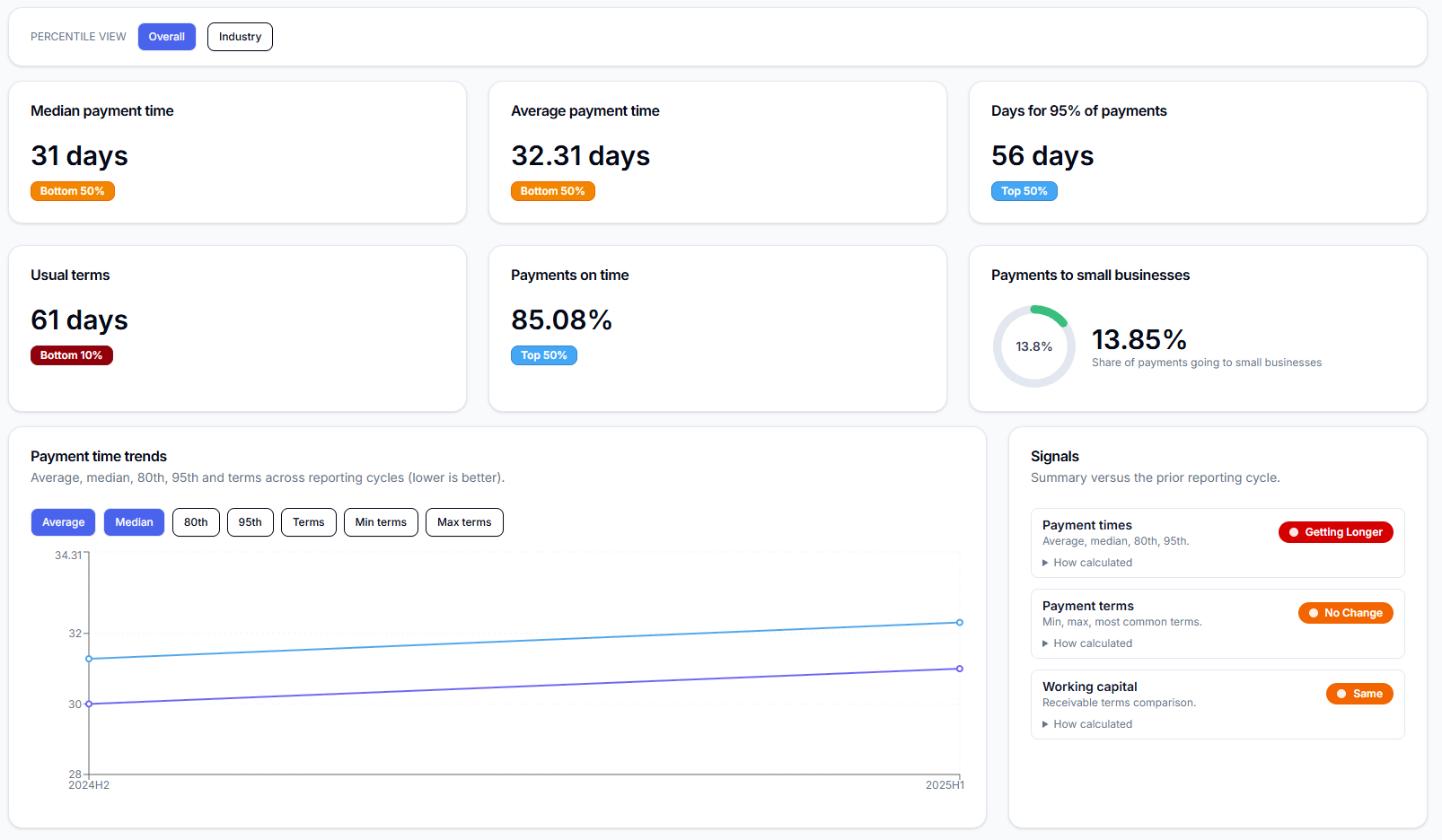
We run pre-submission methodology and report reviews, checking for regulatory red flags and ensuring the underlying data, calculations and reporting process align precisely with the Act and current regulatory guidance.
Yes, and most reporters underuse the opportunity. We position the Payment Times Report as a public demonstration of fair-dealing credentials and supplier-fair-trading commitments, not just a compliance filing.
Speak to former senior Treasury payment times advisers.
Named principal on every matter. Senior advice, no junior hand-offs.